MCCM
MCCM RESILIENCE
 OUR MEDIA


A new study maps platform power, regulation, and how news media depend on platforms for reach and visibility in Southeast Europe
In today’s media landscape, the most powerful editors are no longer sitting in newsrooms. They are algorithms.
From Facebook feeds to TikTok videos, from YouTube recommendations to Google search results, the information we consume is increasingly shaped by systems we cannot see, fully understand, or meaningfully challenge.
For journalists, policymakers, and citizens alike, this raises a pressing question: who governs the digital public sphere?
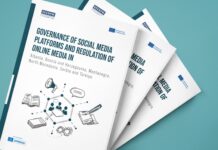
A new regional study Governance of social media platforms and regulation of online media in Albania, Bosnia and Herzegovina, Montenegro, North Macedonia, Serbia and Türkiye offers one of the most comprehensive overviews to date in Southeast Europe of how social media platforms and online media are regulated—and what that means for public interest information, freedom of expression, and the future of journalism and democracy.
The regional study is also available in 🇦🇱 Albanian, 🇧🇦 Bosnian, 🇲🇪 Montenegrin, 🇲🇰 Macedonian, 🇷🇸 Serbian and 🇹🇷 Turkish.
In addition to the regional study, country-specific findings in English are available in separate annexes for: Albania, Bosnia and Herzegovina, Montenegro, North Macedonia, Serbia, and Türkiye, each providing a detailed overview of the governance of social media platforms and regulation of online media in the respective country.
The same country-specific findings are also available in local-language versions for 🇦🇱 Albania, 🇧🇦 Bosnia and Herzegovina, 🇲🇪 Montenegro, 🇲🇰 North Macedonia, 🇷🇸 Serbia, and 🇹🇷 Türkiye.
A Region at a Digital Crossroads
Across Southeast Europe, digital platforms have become central to how people access news. Traditional media outlets are no longer the primary gatekeepers of information; instead, they operate within an ecosystem dominated by global tech companies.
The study shows that this shift has fundamentally transformed journalism. Media organisations are now highly dependent on social media platforms to reach audiences, often relying on them for a significant share of traffic and visibility. At the same time, these platforms determine—through opaque algorithms—which content is seen and which is buried.
This creates a paradox. Social media expands access to information and gives voice to diverse actors. But it also concentrates power in the hands of a few global companies, whose decisions can reshape entire media markets overnight.
Fragmented Regulation, Concentrated Platform Power
One of the study’s central findings is the lack of coherent regulatory frameworks across the region.
In most Western Balkan countries, there are no comprehensive laws specifically governing social media platforms. Instead, regulation is partial, indirect, or still evolving. Some countries have introduced rules for video-sharing platforms or online media, often inspired by EU directives, but these remain limited in scope and effectiveness.
At the same time, there is growing pressure to regulate harmful content – especially disinformation, hate speech, and content affecting children. Yet these efforts often risk overreach, particularly when legal frameworks are vague or politically influenced.
Türkiye represents the extreme end of the spectrum. The study describes a centralised and highly restrictive regulatory model, where authorities can order content removals, block platforms, and impose strict compliance requirements on tech companies.
The contrast is stark: while some countries struggle with weak regulation and limited enforcement, others demonstrate how regulation can be used to exert control over the digital space.
Algorithmic Gatekeeping Beyond the Law
Beyond formal laws, the study highlights a deeper issue: the informal power of platforms themselves.
Social media companies decide what content is promoted, demoted, or removed. These decisions are often made through automated systems that lack transparency and may not account for local languages, contexts, or journalistic standards.
Journalists across the region report:
- unexplained content removals
- difficulties appealing platform decisions
- reduced visibility for public interest content
- challenges in communicating with platform representatives
In some cases, even verified journalistic content is flagged or taken down, while harmful or misleading content remains online.
This imbalance has real consequences. It affects not only individual media outlets but also the quality of public debate and the health of democratic processes.
When Algorithms Shape Editorial Choices
The study offers rare insight into how media organisations are adapting to this environment.
Newsrooms are increasingly tailoring their content to platform algorithms – prioritising formats and topics that maximise engagement. Video content, emotional headlines, and rapid posting cycles are becoming the norm.
But this comes at a cost.
Many journalists describe a growing tension between visibility and editorial integrity. Content that is sensational, polarising, or entertaining often performs better than nuanced, public-interest reporting.
As a result, media outlets face difficult choices:
- Should they optimise for clicks or for quality?
- Should they follow algorithmic trends or journalistic values?
- Can they afford not to?
For smaller or independent media, the pressure is even greater. Limited resources make it harder to invest in social media strategies, data analysis, or content promotion – putting them at a disadvantage in an already unequal system.
Regulating Harmful Content, Protecting Free Expression
Disinformation and hate speech remain major concerns across the region, but the study shows that legal responses are often problematic.
Most countries have laws addressing hate speech, but enforcement is inconsistent. In some cases, provisions are too narrow; in others, they are too broad and risk being misused.
Similarly, laws targeting “false information” or “panic” can be applied in ways that chill free expression, especially when they involve criminal penalties.
In Türkiye, for example, legislation against “misleading information” has led to arrests and sanctions against journalists and critics. Elsewhere, similar provisions have been used during crises such as the COVID-19 pandemic.
The study makes clear that protecting society from harm and protecting freedom of expression are not mutually exclusive – yet balancing them is difficult.
Self-Regulation: Necessary but Not Sufficient
In the absence of strong formal regulation, self-regulatory mechanisms—such as press councils—play an important role.
Across Southeast Europe, these bodies promote ethical standards, handle complaints, and support media accountability. However, their impact is limited by:
- lack of enforcement powers
- financial constraints
- low public awareness
While self-regulation remains essential, it cannot fully address the challenges posed by global platforms and rapidly evolving digital ecosystems.
Towards a More Rights-Based Digital Space
The study does not offer simple solutions – but it does point towards a way forward.
It emphasises the need for:
- human rights-based regulation, aligned with international standards
- greater transparency and accountability from platforms
- stronger institutional capacity in national regulators
- support for independent journalism and media sustainability
- multi-stakeholder approaches, involving governments, civil society, media, and tech companies
Above all, it highlights that the governance of digital platforms is not just a technical issue—it is a fundamental democratic question.
Why This Evidence Matters Now
As debates about social media, disinformation, and digital regulation intensify across Europe and beyond, understanding the realities on the ground is more important than ever.
This study provides exactly that: a detailed, nuanced, and timely analysis of how the digital public sphere is governed in Southeast Europe – and what is at stake.
What makes it particularly valuable is its regional and comparative perspective.
By examining six countries side by side, it reveals both shared challenges and divergent approaches. It shows how:
- global platform dynamics intersect with local political contexts
- regulatory gaps coexist with restrictive practices
- media systems adapt differently to the same technological pressures
It also grounds its analysis in real experiences of journalists and media organisations, offering insights that go beyond legal frameworks and policy debates.
Inside the Study: From Analysis to Recommendations
The study maps existing laws, regulatory and self-regulatory frameworks, and mechanisms such as fact-checking, assessing how they address illegal and harmful content and their impact on freedom of expression, media freedom and access to information.
You will also find how journalistic content – especially public interest journalism – is moderated and curated on social media platforms, based on media and journalists’ experiences, including cases of flagged or removed content.
The study concludes with detailed recommendations aligned with international human rights standards, organized by relevant stakeholder groups:
- Relevant authorities
- Social media platforms
- Intergovernmental organisations
- Media
- Civil society and academia.
Download the study Governance of social media platforms and regulation of online media in Albania, Bosnia and Herzegovina, Montenegro, North Macedonia, Serbia and Türkiye
This article was produced within the UNESCO project “Building Trust in Media in South East Europe: Support to Journalism as a Public Good”, financed by the EU.
The designations employed and the presentation of material throughout this article do not imply the expression of any opinion whatsoever on the part of UNESCO or the European Union concerning the legal status of any country, territory, city or area or its authorities, or concerning the delimitation of its frontiers or boundaries.
The authors are responsible for the choice and presentation of the facts contained in this article and for the opinions expressed therein, which are not necessarily those of UNESCO or the European Union and do not commit the Organization.